info@nelsonkb.com
 832-998-6598







If walls could talk, stucco would be the friend who insists on wearing linen year-round, effortlessly cool, a little textured, and always timeless. Once reserved for sun-drenched Mediterranean villas and rustic Tuscan farmhouses, stucco has slipped into modern kitchens with a quiet confidence that’s turning heads. It’s not just about plastering a wall; it’s about adding soul, depth, and that perfectly imperfect charm that makes a space feel lived-in yet luxurious. Forget the glossy, flat finishes of yesterday, today’s design lovers are embracing stucco kitchens as the next big interior trend, where texture becomes the new color and subtle imperfections are the ultimate form of elegance.
What is Stucco?
Stucco is a type of plaster made from a mix of cement, sand, lime, and water that’s applied in layers to create a textured surface.
Traditionally, it’s been used on the exterior of Mediterranean, Spanish, and Southwestern-style homes, giving walls that warm, earthy look.
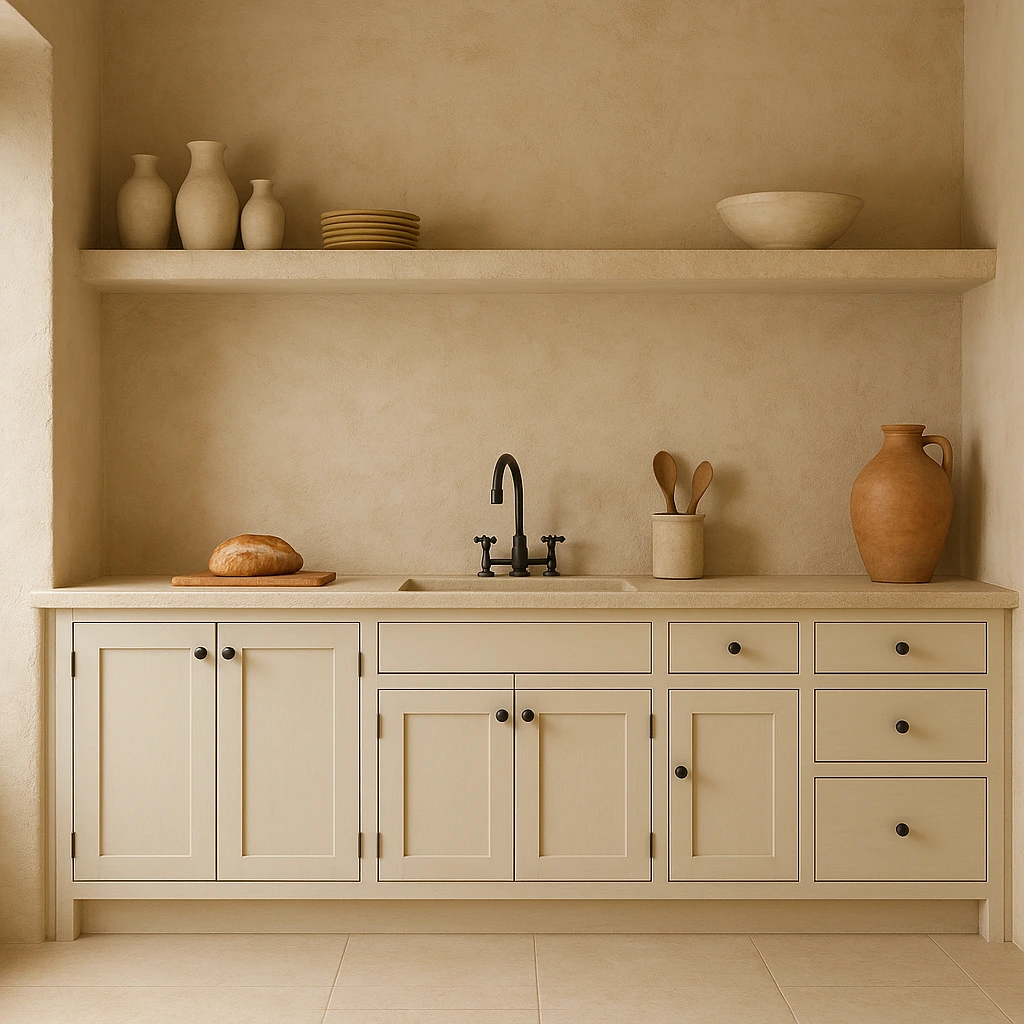
But stucco isn’t limited to the outdoors, its durability, versatility, and natural finish have made it a favorite inside the home too. In kitchens, stucco brings depth and character to walls, islands, and even range hoods, creating a surface that feels both timeless and modern.
See how our designers can create your Dream Kitchen

Get a free 2D layout
Design & layout with as many revisions until it’s perfect!

3D rendering
High quality, realistic 3D rendering of project within 24 hours!

Itemized quote
Quotes are detailed, transparent, and come with 15 day Price Gurantee!

Professional Grade Design
Professionalism and quality so good, 15,000+ families have said YES!
How to Recognize a Stucco Kitchen
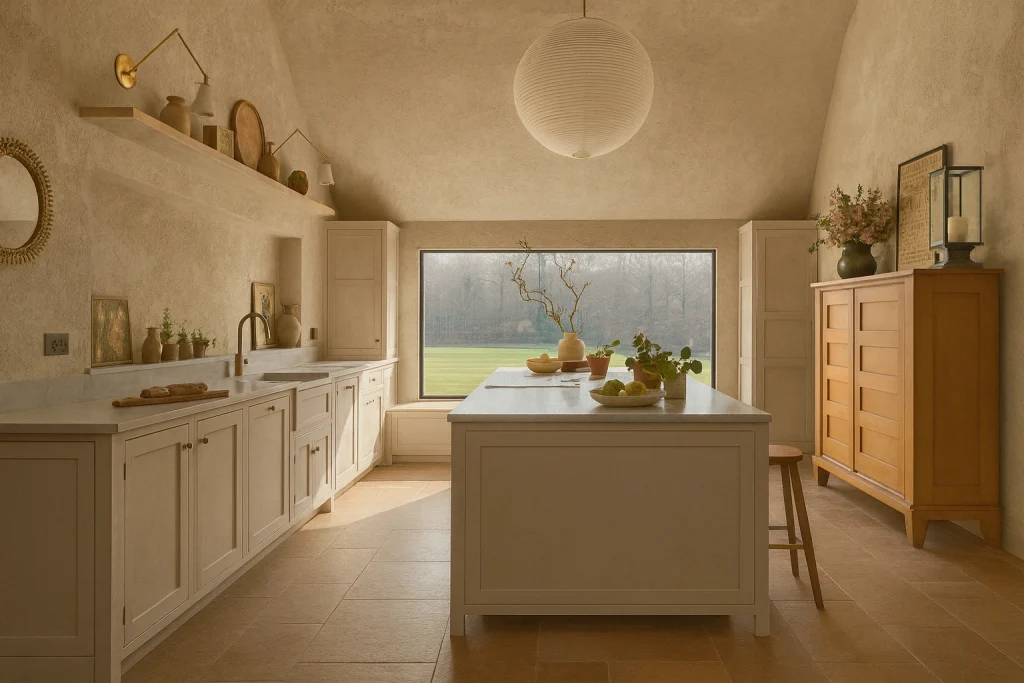
A stucco kitchen is easy to spot once you know what to look for. It’s defined by surfaces that feel handcrafted and textured rather than flat or glossy. Instead of sharp, machine-perfect lines, stucco brings warmth, depth, and an artisanal touch to the space. You’ll often notice:
-
Textured walls or range hoods with subtle variations that catch the light.
-
Natural, earthy tones like whites, creams, warm grays, or sandy beiges.
-
Pairings with organic materials such as stone countertops, wood accents, or matte-finished metals.
-
A soft, lived-in aesthetic that balances rustic charm with modern simplicity.
-
Surfaces that feel tactile, inviting touch and giving the kitchen a sense of depth.
| Pros | Cons |
|---|---|
| Unique textured look that adds character | Can crack if not applied correctly |
| Durable and long-lasting | Limited color options compared to paint |
| Works with both rustic and modern styles | Repairs can be more difficult than repainting |
| Natural, earthy aesthetic | Professional application is usually required |
| Hides minor wall imperfections | May need sealing in areas with heavy moisture |
Core Elements of a Stucco Kitchen
Walls
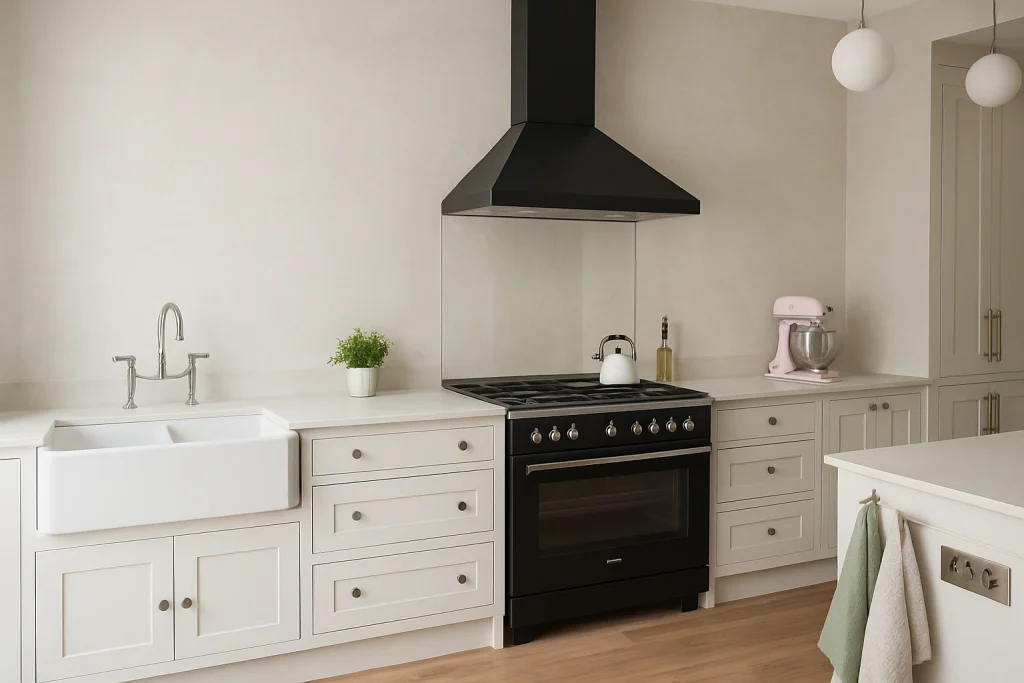
The walls are the star of any stucco kitchen. Applied by hand, stucco creates a textured, layered look that instantly sets the tone of the space. Smooth stucco lends itself to modern, minimalist kitchens, while a slightly rougher finish adds rustic charm. The beauty lies in its subtle imperfections, every wall looks unique and changes character throughout the day as natural light shifts.
Cabinetry
Cabinetry in a stucco kitchen usually complements rather than competes with the walls. Neutral palettes, white, cream, gray, or muted earth tones, work best to highlight the texture of stucco. Shaker-style cabinets are a popular choice, blending clean lines with timeless appeal, but modern flat-panel cabinets can also create a striking contrast. Hardware is often understated, with matte black, brushed brass, or stainless steel finishes.
Countertops & Backsplashes
Countertops and backsplashes in stucco kitchens often lean toward natural materials that enhance the earthy character of the design. Think marble, quartz, soapstone, or even concrete for a modern edge. Stucco can also be applied as a backsplash itself, giving a seamless, monochrome effect. Pairing a textured stucco backsplash with a polished countertop creates balance, ensuring the kitchen feels sophisticated but not overwhelming.
Lighting, Floors & Accents
Beyond walls and cabinets, the supporting elements of a stucco kitchen help bring the whole look together. Lighting plays a crucial role, warm pendant lights or wall sconces highlight the texture of stucco and create dramatic shadows. Flooring often leans toward stone, terracotta, or wood, grounding the space with natural warmth. Decorative accents, such as ceramic vases, woven baskets, or rustic wooden stools, reinforce the organic feel, making the kitchen both functional and inviting.
Design Tips for a Stunning Stucco Kitchen
If you’re planning to bring stucco into your kitchen, a few smart design choices can make all the difference. Here are some straightforward tips to get it right:
-
Choose the right finish – Go for smooth stucco if you want a modern, minimal look; pick a more textured finish for rustic or Mediterranean vibes.
-
Stick to neutral tones – Whites, creams, grays, and sandy beiges let the stucco texture shine while keeping the space timeless.
-
Pair with natural materials – Stone countertops, wood accents, and matte metals complement the organic feel of stucco.
-
Light it properly – Use wall sconces, pendants, or under-cabinet lighting to emphasize the texture and depth of the walls.
-
Keep hardware simple – Sleek cabinet handles in black, brass, or brushed steel work best with stucco’s understated elegance.
-
Don’t overdo it – Stucco makes a statement on its own. Balance it with clean cabinetry, minimal clutter, and simple styling.
-
Think about maintenance – Seal stucco near sinks or cooking zones to protect it from moisture and stains.
Designing an Outdoor Stucco Kitchen
An outdoor stucco kitchen brings the same timeless charm of stucco interiors to your backyard, patio, or garden space. Because stucco is naturally durable and weather-resistant, it’s an ideal material for creating a cooking and entertaining area that blends beauty with function.
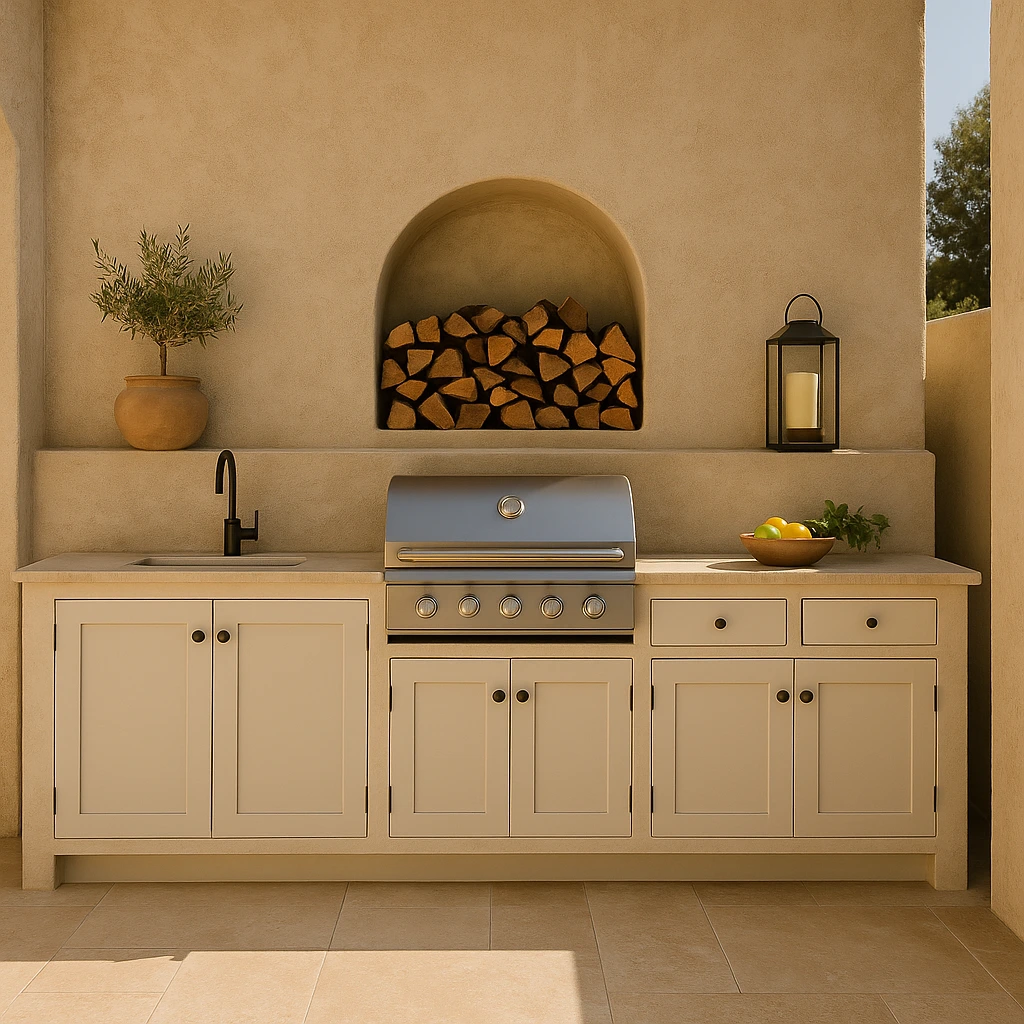
Here are a few key things to keep in mind when designing one:
-
Plan for durability – Stucco stands up well to sun, wind, and rain, but make sure it’s properly sealed to prevent cracks over time.
-
Pair with stone or tile – Natural stone countertops or tiled work surfaces work perfectly with stucco bases, adding both resilience and style.
-
Incorporate built-in features – Grills, pizza ovens, or even full outdoor ranges can be seamlessly framed with stucco for a cohesive look.
-
Choose a complementary palette – Warm earth tones, sandy neutrals, or soft whites tie the outdoor kitchen to the natural surroundings.
-
Add overhead cover – A pergola or awning protects both the stucco and your cooking area from direct sun and rain.
-
Think about lighting – Outdoor sconces, lanterns, or string lights enhance the texture of stucco and extend the use of your kitchen into the evening.
-
Keep it functional – Include storage space, prep areas, and weather-resistant finishes to make the kitchen as practical as it is stylish.
With the right design, an outdoor stucco kitchen becomes more than a place to cook, it’s an extension of your living space, perfect for gatherings, casual dinners, or summer parties.
Final Thoughts
A stucco kitchen is more than just a design trend, it’s a way to bring warmth, texture, and timeless character into the heart of your home. Whether you’re drawn to the rustic charm of traditional stucco or the sleek appeal of modern finishes, pairing it with the right cabinetry, countertops, and accents can transform your kitchen into a space that feels both stylish and inviting.
At Nelson Cabinetry, we make it easy to achieve that look with our high-quality Shaker cabinets that pair beautifully with stucco walls and finishes. Even better, we offer a free 3D kitchen design service so you can visualize your dream stucco kitchen before you commit.
Looking for new cabinets? Gray Collection or White Collection

Nelson Cabinetry
Nelson Cabinetry is an online distributor of high quality kitchen and bathroom cabinetry. We pride ourselves in delivering a high quality product via an easy to use, convenient website. Placing your cabinet order has never been easier and you can do so from the comfort of your home, office or job site.