info@nelsonkb.com
 832-998-6598







Steam is having a moment, and not just in the spa. TikTok feeds are bubbling over with videos of bamboo baskets stacked high with dumplings, salmon gently poaching in aromatic broth, and vibrant greens lifted fresh from simmering pots. This surge in water-based cooking isn’t a passing fad, it’s a shift toward gentler, healthier methods that preserve flavor and texture without drowning dishes in oil.
But here’s the catch: cooking with more steam changes the way your kitchen works. Moisture lingers, cookware gets bulkier, and ventilation becomes non-negotiable. If your cabinets aren’t ready to store steamers or your finishes can’t handle humidity, you’ll feel it fast. That’s why the kitchens embracing this trend aren’t just about recipes, they’re about smart design that’s as prepared for a TikTok challenge as it is for Tuesday night dinner.
How Water-Based Cooking Impacts Kitchen Design
Water-based cooking, whether steaming, poaching, or simmering, introduces one design factor you can’t ignore: moisture. Unlike dry-heat methods such as roasting or grilling, these techniques release steady clouds of steam into your kitchen. Without proper planning, that extra humidity can warp cabinet doors, damage finishes, and even encourage mold in hidden corners. Ventilation becomes the first priority. A high-quality range hood with strong capture power is essential, especially if you regularly use stacked steamers or large stockpots. In some modern kitchens, a built-in steam oven positioned near a vent offers both convenience and control over moisture release.
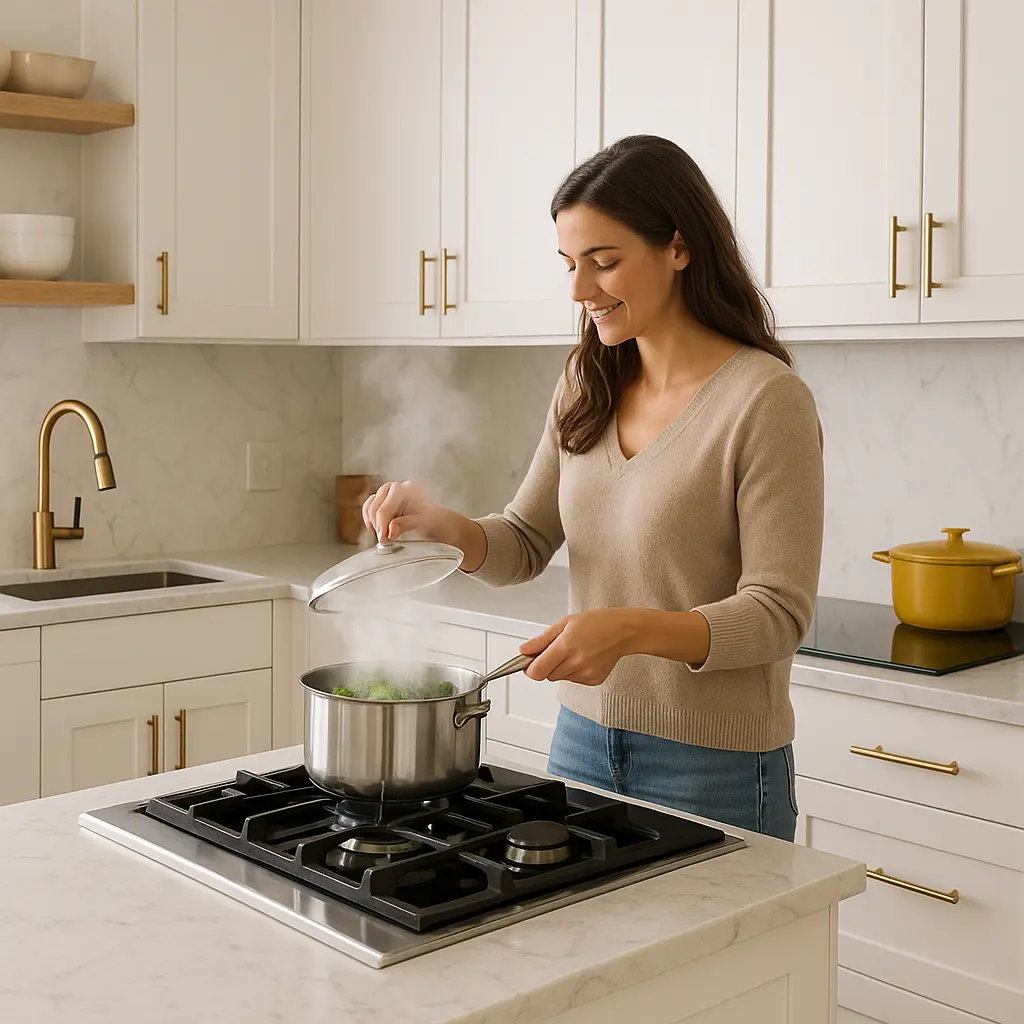
Then there’s the matter of storage. Steamer baskets, oversized pots, and deep braising pans don’t tuck neatly into standard cabinets. That’s why water-based cooking fans benefit from deep drawers, pull-out shelves, and vertical tray dividers. Finishes and materials also play a big role. Moisture-resistant laminates, sealed woods, and rust-proof hinges can stand up to years of steam without showing wear. Combined with a layout that keeps “wet zones” separate from dry storage, these choices help maintain both form and function.
Cabinets for Water-Based Cooking
Cooking with steam, poaching, or simmering requires a kitchen that can handle bulky cookware, extra moisture, and frequent use. The right cabinet setup makes all the difference between a smooth workflow and a cluttered countertop.
1. Deep Pot Drawers (Essential)
-
Purpose: Store heavy, oversized pots, multi-tier steamers, and deep braising pans.
-
Why It Matters: Steamers and stockpots don’t fit well in standard upper cabinets. Deep drawers keep them accessible without bending or lifting awkwardly.
-
Tip: Choose drawers with heavy-duty soft-close glides to handle the extra weight.
2. Pull-Out Shelves (Highly Recommended)
-
Purpose: Perfect for heavy countertop appliances like electric steam ovens, pressure cookers, or large saucepans.
-
Why It Matters: Pull-outs allow you to slide equipment forward instead of lifting it out from the back of a base cabinet.
-
Tip: Include adjustable-height shelves to fit different sizes of cookware over time.
3. Vertical Tray Dividers (Space Saver)
-
Purpose: Organize steamer lids, bamboo baskets, baking sheets, and cooling racks.
-
Why It Matters: Keeps flat items upright, preventing scratches and making it easy to grab what you need.
-
Tip: Install these in narrow base cabinets or in the upper section of pantry cabinets.
4. Appliance Garages (For Built-In Steam Ovens)
-
Purpose: Conceal small appliances or a compact steam oven when not in use.
-
Why It Matters: Maintains a clean, uncluttered kitchen while keeping your tools ready for action.
-
Tip: Pair with lift-up or tambour doors for easy access without blocking walkways.
See how our designers can create your Dream Kitchen

Get a free 2D layout
Design & layout with as many revisions until it’s perfect!

3D rendering
High quality, realistic 3D rendering of project within 24 hours!

Itemized quote
Quotes are detailed, transparent, and come with 15 day Price Gurantee!

Professional Grade Design
Professionalism and quality so good, 15,000+ families have said YES!
Materials & Finishes That Handle Moisture
When water-based cooking becomes part of your routine, your kitchen isn’t just battling grease—it’s facing constant bursts of steam. Over time, that moisture can cause swelling, peeling, and warping if your cabinets aren’t built from the right materials. Choosing finishes and construction designed for humid environments ensures your kitchen stays beautiful and functional for years.
Here’s how some of the most common cabinet materials stack up for steam-heavy cooking:
| Material / Finish | Moisture Resistance | Durability in Humid Kitchens | Maintenance Needs | Best For |
|---|---|---|---|---|
| Sealed Hardwood (e.g., maple, oak) | ★★★★☆ High | Very durable if regularly resealed | Wipe dry, reseal every few years | Classic, high-end kitchens |
| Marine-Grade Plywood | ★★★★★ Excellent | Extremely stable in high humidity | Minimal, occasional cleaning | Long-term resilience |
| High-Pressure Laminate (HPL) | ★★★★☆ High | Resists swelling & peeling well | Easy to wipe down | Modern, budget-conscious designs |
| Thermofoil | ★★★☆☆ Moderate | Can peel if exposed to prolonged steam | Avoid direct heat/steam exposure | Affordable, smooth finish |
| Melamine | ★★★☆☆ Moderate | Resists stains, moderate steam tolerance | Simple cleaning | Low-maintenance spaces |
| Metal (Stainless Steel) | ★★★★★ Excellent | 100% moisture-proof, scratch-resistant | Fingerprint cleaning | Professional or industrial kitchens |
Pro Tip: Pair moisture-resistant cabinet materials with rust-proof hardware (stainless steel or coated hinges) to ensure every part of your cabinetry stands up to steam.
Ventilation & Layout Tips
Water-based cooking fills the air with constant steam, making proper ventilation essential for protecting your cabinets and maintaining a comfortable kitchen. A high-capacity range hood with a wide capture area should be your first upgrade, ideally one that extends over the front burners where steaming pots often sit. For built-in steam ovens, position them directly beneath a range hood or next to a downdraft vent so moisture is drawn away before it condenses on nearby surfaces.
Your layout should also support airflow and keep humidity away from vulnerable storage areas. Designate a “steam zone” for appliances like electric steamers, placing them beneath ventilation and away from dry storage such as spice cabinets or pantry shelves. Allow small gaps for air circulation around cabinetry, and avoid crowding cabinets against walls where condensation can get trapped. With smart appliance placement and effective ventilation, your kitchen will stay fresh, dry, and ready to handle the healthiest cooking trend of 2025.
Final Thoughts
Water-based cooking is a healthier, flavorful way of preparing meals that can inspire your entire kitchen design. From deep drawers for bulky steamers to moisture-resistant finishes that stand up to years of humidity, the right storage solutions make this cooking style both practical and enjoyable. At Nelson Cabinetry, we specialize in cabinetry designed to handle the demands of steam-filled kitchens, combining smart organization with materials built to last. Whether you’re upgrading for a built-in steam oven or simply want RTA cabinets that keeps your cookware protected, we can help you create a kitchen that’s ready for the trends of today—and tomorrow.
Looking for new cabinets? Gray Collection or White Collection

Nelson Cabinetry
Nelson Cabinetry is an online distributor of high quality kitchen and bathroom cabinetry. We pride ourselves in delivering a high quality product via an easy to use, convenient website. Placing your cabinet order has never been easier and you can do so from the comfort of your home, office or job site.