info@nelsonkb.com
 832-998-6598







Are you thinking about remodeling your kitchen? If so, one of the most important decisions you’ll need to make is selecting a material for your new cabinets. A popular choice is composite wood, which combines different materials to create a durable and stylish product. But what exactly is composite wood and why might it be the best option for your kitchen cabinets?

In this blog post, we’ll explain in detail what composite wood is as well as how it can benefit homeowners looking to upgrade their kitchens with both high-quality and beautiful cabinetry.
What is Composite Wood?
Engineered wood, also known as composite wood or composite board, is a material created by combining wood fibers or particles with adhesive resins. It is specifically engineered to offer distinct advantages over traditional solid wood, making it a widely-used option in construction, furniture manufacturing, and interior design.
The main constituents of composite wood are as follows:
- Wood Fibers or Particles: These are usually obtained from wood scraps, sawdust, or wood chips, sourced from different wood species. This diversity in wood sources makes composite wood a versatile material.
- Adhesive Resins: Binders like glue or resin are employed to bind the wood fibers or particles. These adhesives are chosen based on their capacity to produce a strong and durable composite material.
Composite wood is produced through a process involving the mixing of wood fibers or particles with adhesive resin. The mixture is then compressed and heated to create sheets or boards. This manufacturing process can be customized to yield various types of composite wood, each possessing its own unique characteristics.
Types of Composite Wood
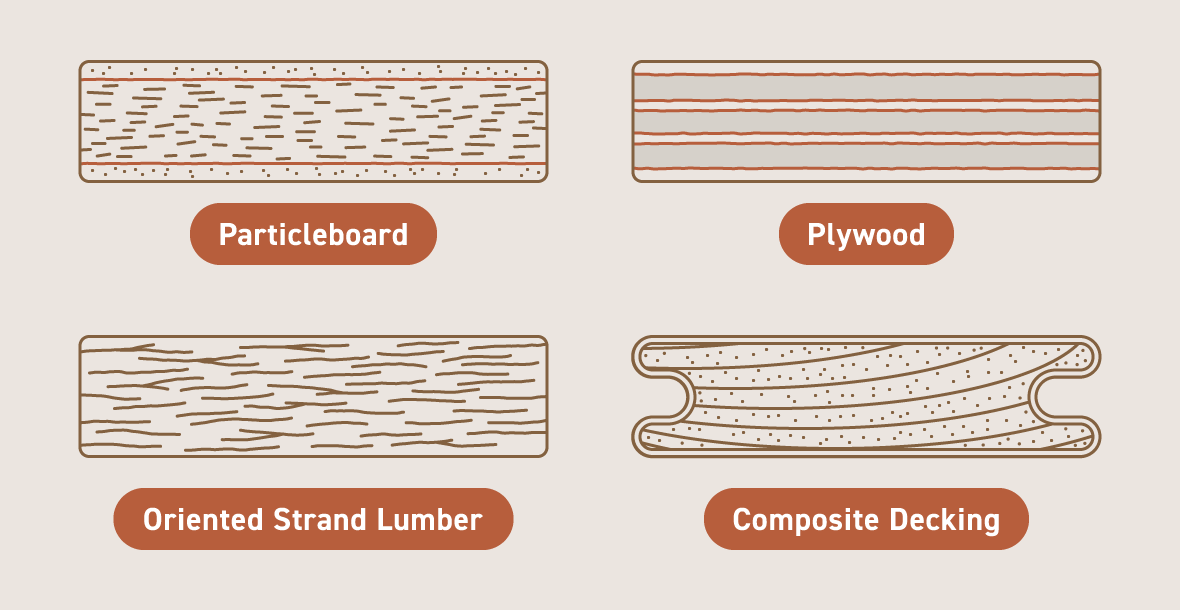
Particleboard
Particleboard, also known as chipboard, is a composite wood material created by bonding small wood particles or chips together using adhesive resins under heat and pressure. It is widely used as a cost-effective core material in furniture and cabinets.
Medium Density Fiberboard (MDF)
Medium Density Fiberboard, or MDF, is produced by breaking down wood fibers into a fine consistency and combining them with resin adhesive. MDF is valued for its smooth surface, making it a popular option for furniture, cabinetry, and interior molding.
Plywood
Plywood is a composite wood material consisting of multiple layers (plies) of wood veneers. These veneers are glued together in a way that alternates the grain direction between adjacent layers. Plywood is known for its strength, stability, and versatility, making it commonly used in construction, cabinetry, and various woodworking projects.
Oriented Strand Board (OSB)
Oriented Strand Board, or OSB, is composed of strands or flakes of wood that are oriented in specific directions and bonded together with adhesive. OSB is frequently utilized in construction for sheathing, flooring, and roofing due to its structural integrity and cost-effectiveness.
Hardboard
Hardboard, also referred to as high-density fiberboard (HDF), is a dense and smooth composite wood material. It is manufactured by compressing wood fibers with heat and pressure. Hardboard is employed in applications that require a smooth surface finish, such as doors, paneling, and decorative wall coverings.
Laminated Veneer Lumber (LVL)
Laminated Veneer Lumber, or LVL, is a composite wood product made by layering and gluing thin wood veneers with their grains parallel to each other. LVL is recognized for its high strength and dimensional stability, making it commonly used in structural applications such as beams and headers in construction.
Composite Decking
Composite decking is specifically designed for outdoor usage. It is a composite wood product typically comprised of a mixture of wood fibers, plastic, and bonding agents. Composite decking offers durability and resistance to rot, making it a superb choice for decking, patios, and outdoor furniture.
See how our designers can create your Dream Kitchen

Get a free 2D layout
Design & layout with as many revisions until it’s perfect!

3D rendering
High quality, realistic 3D rendering of project within 24 hours!

Itemized quote
Quotes are detailed, transparent, and come with 15 day Price Gurantee!

Professional Grade Design
Professionalism and quality so good, 15,000+ families have said YES!
Is Composite Wood Better Than Wood?
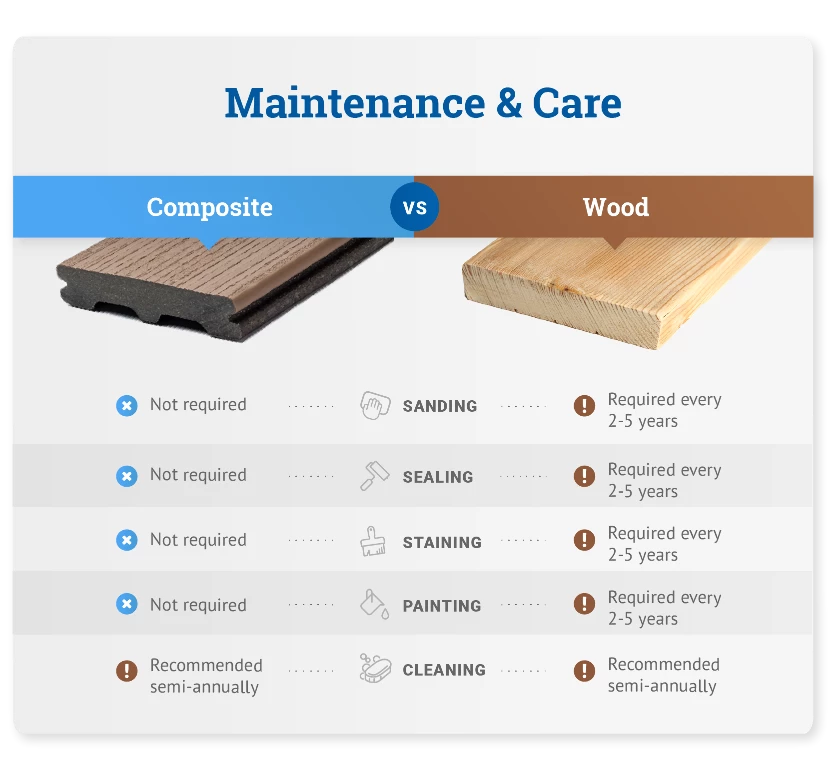
When deciding between composite wood and traditional solid wood, the choice depends on the specific application and project priorities. Each material has its own set of pros and cons, so let’s compare them to help you make an informed decision:
Composite Wood
Advantages
- Durability: Composite wood is often more resistant to decay, rot, and insects compared to natural wood, making it suitable for outdoor uses like decking and fencing.
- Dimensional Stability: Composite wood is less prone to warping, twisting, or cracking, ensuring long-term shape and appearance retention, especially for stability-focused applications.
- Low Maintenance: Composite wood typically requires less upkeep, as it doesn’t need frequent staining, sealing, and is resistant to fading and staining.
- Sustainability: Many composite wood products are made from recycled materials, making them an environmentally friendly choice.
- Customization: Composite wood offers a wide array of colors, finishes, and styles to meet your project’s aesthetic requirements.
Disadvantages
- Limited Natural Aesthetics: While composite wood can imitate the appearance of natural wood, solid wood enthusiasts may prefer the unique grain and texture of the real deal.
- Limited Repairability: Repairing damaged composite wood can be challenging compared to solid wood, which can be sanded, refinished, or repaired with ease.
Solid Wood
Advantages
- Natural Beauty: Solid wood possesses a timeless aesthetic appeal with its natural grain patterns, colors, and textures, elevating the beauty of furniture, flooring, and cabinetry.
- Repairability: Scratch or damage? Solid wood can be easily repaired and refinished, extending its lifespan when properly cared for.
- Customization: Solid wood can be easily shaped and carved, allowing the creation of intricate designs and details that are perfect for custom furniture and cabinetry.
Disadvantages
- Upkeep: Solid wood necessitates frequent maintenance, such as sealing, staining, or painting, to safeguard against moisture, UV exposure, and pests.
- Susceptible to Warping: Natural wood is prone to warping, shrinking, or expanding as humidity and temperature fluctuate. This could pose challenges in certain scenarios.
What is the Best Composite Wood for Kitchen Cabinets?
Plywood is a popular option for kitchen cabinets because of its numerous advantages. Firstly, it provides excellent strength and durability. Its layered construction resists warping and cracking, making it perfect for the demanding kitchen environment. Additionally, plywood can be treated to resist moisture, preventing issues like swelling and mold growth.
Another benefit is its smooth surface, which is ideal for veneering or painting to achieve the desired look. Plywood’s versatility in terms of grades, thicknesses, and veneers allows for a wide range of design possibilities to match different kitchen styles.
One significant advantage of plywood is its cost-effectiveness. It offers a durable option at a lower price point compared to solid wood. Cabinet makers favor plywood due to its customization potential, and there are eco-friendly options available that use responsibly sourced materials and low-VOC adhesives.
Final Thoughts
Would you like to have the best kitchen cabinets that will last for years and provide a considerable amount of savings in both time and money? Well, then composite wood is an excellent option for your kitchen cabinets. Not only does it provide superior strength and sturdiness, but it also costs less than solid wood kitchen cabinets.
Plus, it’s easier to maintain and clean since it’s made up of synthetic materials. With all these advantages, why wait any longer? Shop at Nelson Cabinetry now to upgrade your kitchen with composite wood cabinets and start enjoying the beauty of modernized living!
Looking for new cabinets? Gray Collection or White Collection

Nelson Cabinetry
Nelson Cabinetry is an online distributor of high quality kitchen and bathroom cabinetry. We pride ourselves in delivering a high quality product via an easy to use, convenient website. Placing your cabinet order has never been easier and you can do so from the comfort of your home, office or job site.